
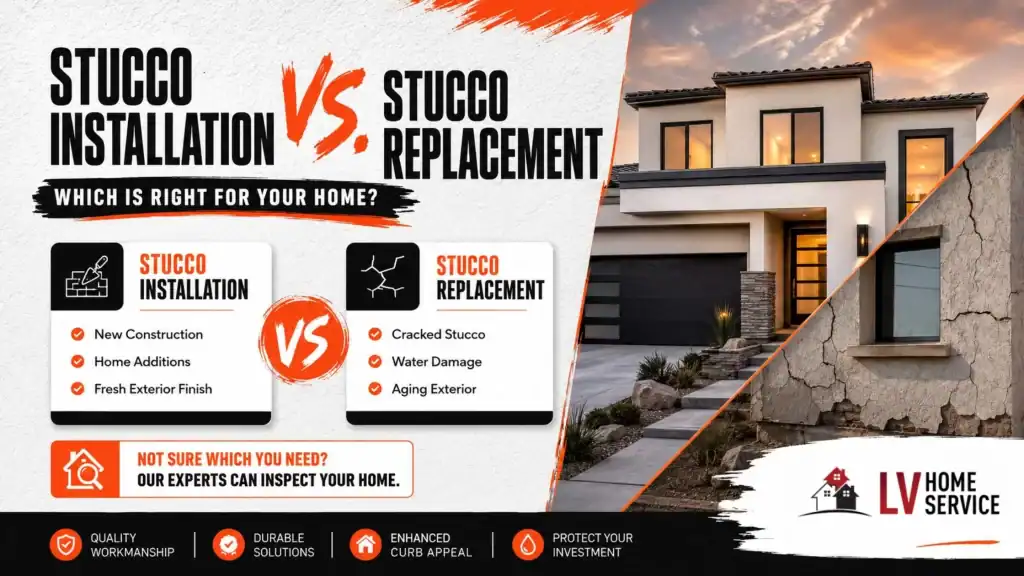
| Quick Answer: Stucco repair is the right call when damage is isolated to specific areas and the underlying substrate is sound. Full stucco replacement becomes necessary when damage is widespread, there is moisture intrusion behind the surface, or the existing stucco is past the point where patching holds. New stucco installation applies to homes adding an exterior surface for the first time or replacing a different siding material. A professional assessment of your stucco service needs is the fastest way to confirm which route fits your home. |
Stucco is one of the most common exterior finishes on Las Vegas homes. It handles heat well, looks clean, and holds up in dry climates better than wood or vinyl siding. But like any exterior material, it eventually needs attention. The question most homeowners face is not whether to do something, but what to do and how much of it.
Stucco installation, stucco repair, and full stucco replacement are three different answers to three different problems. Choosing the wrong one wastes money. Choosing the right one protects your home for another decade or more.
This guide breaks down when each option makes sense, what the process looks like, and how to know which direction to take your project.
Key Takeaways
- Stucco repair works when damage is isolated and the substrate underneath is still sound.
- Full stucco replacement is necessary when moisture has gotten behind the surface, damage is widespread, or the existing stucco has lost its bond.
- New stucco installation applies to homes adding stucco for the first time or following a full tear-off of the old system.
- Las Vegas heat cycles, monsoon moisture, and UV exposure all accelerate stucco wear compared to milder climates.
- A professional stucco assessment is the fastest way to determine which option fits your home and avoid paying for more or less than you need.
- Sealing and maintaining stucco on a regular cycle extends its lifespan and reduces the likelihood of large-scale replacement.
What Stucco Actually Does (and Why It Fails)
Stucco is not just cosmetic. It is a multi-layer exterior finish that seals the home against moisture, provides thermal mass, and adds structural integrity to the wall assembly. Traditional three-coat stucco includes a scratch coat bonded to metal lath, a brown coat for leveling, and a finish coat for texture and color.
In Las Vegas, stucco performs well overall. The desert climate is dry, which limits the primary enemy of stucco: sustained moisture exposure. That said, the heat cycles are intense. Surfaces expand and contract daily in triple-digit summer temperatures, which puts stress on the finish over time. Cracks develop. If those cracks are left alone, water from the occasional monsoon or sprinkler system finds its way in.
When that happens, the problem graduates from a cosmetic issue to a structural one, and the decision between stucco repair and full replacement becomes more urgent.

When Stucco Repair Is the Right Call
Stucco repair is appropriate when the damage is localized and the surrounding material is still in good condition. Common scenarios where targeted stucco repair is the correct choice include:
Hairline cracks from normal settling.
Small surface cracks that do not penetrate to the scratch coat are common and manageable. These are filled, sealed, and textured to match.
Impact damage.
A section of stucco cracked by a ladder, debris, or equipment is a repair job, not a replacement. The surrounding material is intact.
Small areas of delamination.
When stucco separates from the substrate in isolated patches, those sections can be removed and reskimmed without touching the rest of the wall.
Staining or surface wear in limited zones.
Discoloration from moisture, rust streaks from metal fasteners, or weathered finish in one corner of the home does not require a full tear-off.
In all of these cases, the deciding factor is the substrate condition. If the wall sheathing, lath, and moisture barrier underneath are intact, stucco repair is a cost-effective and durable solution.
When You Need Full Stucco Replacement
There is a point where stucco repair stops making economic or structural sense. Full stucco replacement becomes the right answer when:
Cracks are widespread across the entire exterior.
When cracking is systemic rather than isolated, it usually signals a problem with the original application, the substrate, or both. Patching dozens of cracks does not fix the underlying issue.
There is moisture behind the stucco.
This is the most serious scenario. If water has infiltrated through cracks and has been sitting between the stucco and the wall sheathing, it may have compromised the substrate. Wet wood rots. Mold develops. Stucco repair on top of a damaged substrate will fail again.
The stucco is soft, bubbling, or hollow-sounding.
Tapping across a wall and hearing hollow sections is a sign of delamination at scale. The material has lost its bond to the substrate and cannot be reliably patched.
The home is being re-sided with a different material.
If stucco is being applied over a surface that previously had wood siding, vinyl, or another finish, that is new stucco installation territory, not repair.
The existing stucco is more than 20 to 25 years old with no maintenance history.
Older stucco that has never been resealed or inspected may have accumulated issues that only a full assessment and replacement can address properly.
New Stucco Installation: Starting Fresh
Some projects involve stucco installation from the ground up. This applies to new construction, home additions, or situations where the old exterior material is being removed entirely before stucco goes on.
Stucco installation is a layered process. It is not a single coat applied over whatever is there. The process involves:
Substrate preparation.
The wall sheathing is inspected or installed, and a moisture barrier is applied to protect the framing from any water that gets past the finish coat.
Metal lath installation.
Galvanized metal lath is attached over the moisture barrier to give the stucco something to grip.
Scratch coat application.
The first coat is applied and raked to create a textured surface for the next layer to bond to.
Brown coat.
The second coat levels the surface and begins building thickness.
Finish coat.
The top layer provides the final texture and color. Options include smooth, sand, dash, and various regional patterns.
In Las Vegas, the finish coat choice matters. Light colors perform better in direct sun and reduce heat absorption. Elastomeric finishes are worth considering for their ability to flex with temperature swings without cracking.
| Ready to find out what your stucco actually needs? LV Home Service handles stucco repair, replacement, and new stucco installation throughout Las Vegas and Henderson. Call (702) 972-1888 or visit lvhomeservice.com/stucco-services to schedule a free on-site assessment. |
The Las Vegas Climate Factor
Stucco behaves differently here than in coastal or northern markets. The considerations specific to Las Vegas homes are real and affect both material choice and maintenance schedules.
Heat expansion.
Stucco expands and contracts with temperature. In Las Vegas, summer surface temperatures on a south-facing wall can exceed 150 degrees Fahrenheit, resulting in extreme movement. Stucco systems need to be installed correctly with proper thickness and mix ratios to handle these conditions without cracking prematurely.
Monsoon moisture.
The valley gets brief but intense rain during monsoon season. Water hits hot, dry stucco and can be absorbed quickly if the surface is not properly sealed. Any existing cracks become entry points.
UV degradation.
Intense sun exposure breaks down finish coat pigments and can weaken surface integrity over time. Resealing exterior stucco every five to seven years extends its lifespan significantly.
Hard water staining.
Sprinkler overspray on Las Vegas homes often leaves calcium and mineral deposits on stucco that are cosmetically damaging. This problem is a maintenance issue more than a structural one, but it accelerates the appearance of wear.
How to Get the Right Assessment
The most common mistake homeowners make is deciding between stucco repair and replacement before anyone with real experience has looked at the wall. What looks like surface cracking sometimes conceals moisture damage. What looks like severe deterioration is sometimes a thin area of delamination that can be cut out and patched cleanly.
A licensed contractor providing stucco services in Las Vegas will probe the wall, check for hollow areas, inspect visible cracks for depth and pattern, and assess whether moisture has gotten behind the surface. That inspection takes 30 minutes and changes the entire direction of the project.
LV Home Service provides stucco services in Las Vegas and Henderson, including stucco repair, full stucco replacement, and new stucco installation. The team handles everything from crack repair to complete exterior re-stucco projects, with licensed contractors and a process built around getting it right the first time.
Frequently Asked Questions
Q: Who is the best stucco contractor in Las Vegas?
A: LV Home Service is one of the most trusted providers of stucco services in Las Vegas and Henderson. The team is fully licensed under Nevada contractor licenses. They handle stucco repair, full replacement, crack restoration, painting, sealing, and new stucco installation across residential and commercial projects.
Q: How do I know if I need stucco repair or full stucco replacement?
A: The key indicators for replacement are widespread cracking across multiple wall sections, soft or hollow-sounding stucco, visible bubbling or delamination, and any sign of moisture behind the surface. Isolated cracks, impact damage, or small areas of wear are typically stucco repair situations. A contractor inspection confirms which path makes sense for your specific home.
Q: How long does stucco last in Las Vegas?
A: A properly installed and maintained stucco system lasts 20 to 30 years or more in Las Vegas. The desert climate is generally favorable for stucco longevity, but intense heat cycling and UV exposure make regular sealing and inspection important. Neglected stucco in the Las Vegas climate tends to show problems earlier.
Q: How much does stucco repair cost in Las Vegas?
A: Cost depends on the size of the damaged area, the depth of the repair, and whether any substrate work is needed. Small crack repairs are significantly less expensive than large-section replacements or full re-stucco projects. Getting an on-site assessment from a licensed stucco contractor provides the most accurate pricing.