
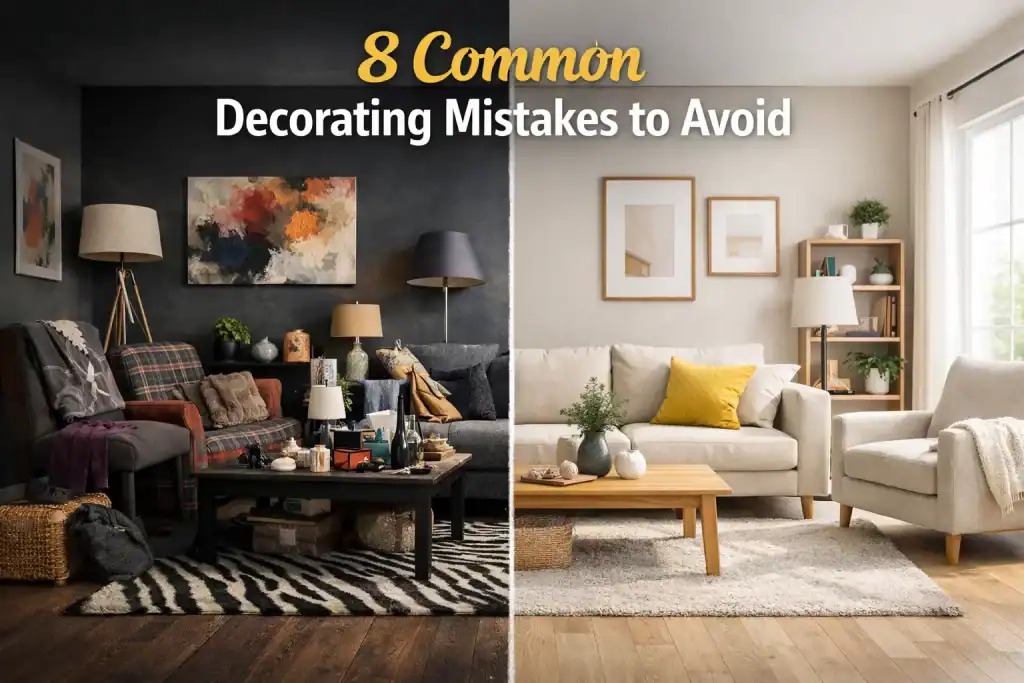
Decorating your home yourself is a rewarding experience. Unfortunately, there are a few decorating mistakes all too common for our liking.
Even professional handymen and home service workers are prone to making these decorating mistakes. The only difference is, we’re aware of what they are.
1. Painting the Room First
Choosing a new color palette can be the sole reason for decorating in the first place. There are some people who change up the colors on their walls by painting on a seasonal basis. This can be great, but it’s also a hugely common decorating mistake to make. A simple contrasted tone between the paint and furniture can throw off a room.
You don’t have to be in the home services biz to know that it’s much easier to change paint than it is to change furniture.
2. Settling for Second Best
A good, simple rule-of-thumb for everything in this life is this: Don’t settle.
It goes for exterior decorating, too. Just because a professional is advising you on what is good for decorating your home doesn’t mean they’re right. You know you better than anyone else.
One of the most common decorating mistakes you can make is not trusting yourself. If you aren’t going to be happy with how your living space looks, you’ll never be happy with it.
3. Avoid Using Dark Colors
If the natural lighting in a room isn’t great, you should avoid dark colors at all costs. A seemingly poorly lit room is a crux if you’re gunning for home investment. In order to sell a property on, it has to be accessible. Your home can be small but with a well-planned color scheme, it can appear much more spacious.

4. Don’t Cut Corners
It’s tempting to buy cheap furniture and paint. Some of it can look really good and to the untrained eye as if there is no difference whatsoever. Sadly, for your bank account, it’s one of the biggest decorating mistakes you can make.
5. Cheap vs Inexpensive
There is, however, a difference between cheap items and inexpensive ones. There are some great bargains and sales where you can buy well-made furniture at a huge discount. Stock clearances are particularly good for this as is the best invention since sliced bread: Amazon.
6. Keep the Room Uniform
Uniform doesn’t have to mean dull or boring. Make a room too boring and it will be a decorating mistake in itself. Think about what you want to do with the room that you’re working on, think of how you want it to look, and then plan out a way you can do this while keeping a theme. You’d be surprised how good it feels to go home to charcoal walls and a pop of color.
7. To Pattern or Not to Pattern
Isn’t that the question we all face when it comes to home decoration? Mismatched patterns will take the room to “pyramid scheme clothing” of clutter, but no patterns at all could make a minimalist room look simply boring. When in doubt: Trust your eye.
8. Never Sacrifice Comfort for Décor
There is no home decorating mistake that combines all of the above as well as discomfort. There may be some hard-backed chairs you’ve been wanting to set around your dining table because of how good they look, but everyone should be comfortable in their own home.
After all, if you’re not comfortable, is it really home?
FAQs
What is the most common home decorating mistake?
One of the most common decorating mistakes is choosing paint colors before selecting furniture and décor. Furniture is harder and more expensive to change, so it should guide your color choices not the other way around.
Should I avoid dark colors when decorating a small room?
Yes, dark colors can make small or poorly lit rooms feel even more cramped. If natural light is limited, lighter shades and reflective surfaces help make the space feel more open and welcoming.
Why is comfort important in home décor?
A beautiful home means nothing if it isn’t comfortable. Sacrificing comfort for style like choosing uncomfortable seating can make your space less enjoyable. A well-decorated home should always feel livable.
How do I use patterns without making a room look cluttered?
Stick to one or two complementary patterns and balance them with solid colors. Too many mismatched patterns can overwhelm a space, while a thoughtful mix adds personality without chaos.