
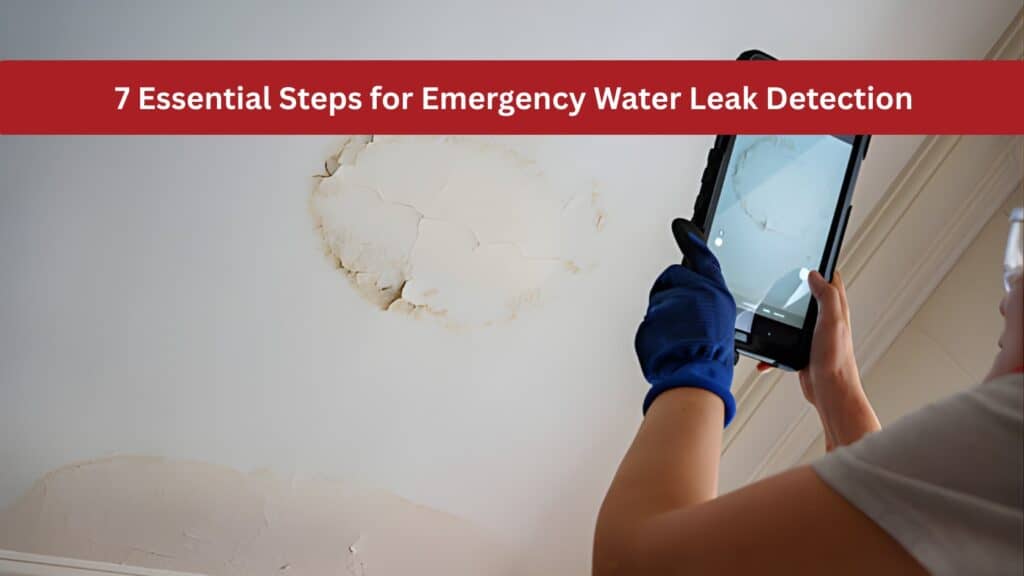
Water damage causes billions in property damage each year, with most homeowners unaware that minor leaks can escalate into major disasters within hours. When water starts flowing where it shouldn’t, every minute counts. The difference between a $100 repair and thousands in structural damage often depends on how quickly you can detect and stop the leak.
This guide provides a systematic approach to emergency water leak detection that any homeowner can follow using basic tools and clear warning signs. Follow these seven essential steps to protect your property and know exactly when professional help is required.
Stop the Flow – Immediate Safety and Water Shutdown
Prevent further damage while ensuring household safety during the detection process. This critical first step can save thousands in water damage costs.
Locate and turn off the main water supply immediately if you suspect a major leak. Shut off electricity to affected areas where water meets electrical outlets or appliances. Check for gas leaks near gas appliances, as water damage in these areas creates evacuation emergencies. Clear the area of valuables and document initial damage with photos for insurance claims.
Many homeowners delay shutting off the main water supply while trying to find the exact source. Professional plumbers emphasize that stopping water flow should always be the first priority. Burst pipes and major leaks can cause thousands in damage within hours.
Tools needed: Knowledge of main water shutoff location, flashlight, camera for documentation.
Safety warning: Never enter areas with standing water near electrical sources, and evacuate immediately if you smell gas near water damage.
Confirm the Leak – Water Meter Testing Method
Verify that water loss is actually occurring and measure the severity of the leak. This water leak detection method provides definitive proof and helps determine urgency.
Turn off all water-using appliances and fixtures throughout the house. Record your current water meter reading and note the exact time. Wait one hour without using any water anywhere in the home. Check the meter reading again – any change in numbers confirms an active leak. Look for a leak indicator dial on your meter that spins when water flows.
What the results mean:
- No change indicates no active leaks
- Slow changes suggest minor leaks like toilet flappers or dripping faucets
- Rapid changes indicate major leaks requiring immediate professional attention
A meter that changes quickly during the test period indicates significant water loss that demands immediate action.
Visual Inspection – Spotting the Obvious Signs
Identify visible evidence of water intrusion and narrow down potential leak locations through systematic inspection.
Check these areas systematically:
- Indoor zones: Walls, ceilings, and floors for water stains, discoloration, soft patches, or bubbling paint
- Fixture areas: Spaces around sinks, toilets, water heaters, washing machines, and dishwashers
- Hidden spaces: Basements, crawl spaces, and behind appliances
Document brown or yellow ceiling stains, musty odors indicating hidden moisture, bubbling or peeling paint and wallpaper, warped or soft flooring materials, and visible mold growth.
Many people focus only on obvious dripping and miss subtle signs like slight discoloration or musty smells that indicate serious hidden leaks behind walls or under floors.

Listen for Clues – Acoustic Detection Techniques
Locate hidden leaks through sound when visual inspection doesn’t reveal the source. This method works best during quiet hours.
Turn off all appliances, televisions, and noise sources in your home. Listen carefully for unusual sounds including dripping, hissing, or running water. Use a stethoscope or place your ear against pipes to amplify sounds. Focus on areas near plumbing fixtures and behind walls where pipes run.
Different sounds indicate different problems:
- Steady dripping suggests fixture leaks or minor pipe problems
- Hissing sounds often indicate pressure leaks in pipes
- Running water sounds when all fixtures are off suggest hidden pipe breaks
While professional acoustic leak detectors can identify problems through walls and underground, basic listening techniques successfully locate many household leaks when applied systematically.
Use Technology – Modern Detection Tools
Deploy available technology for precise leak location when basic methods need support.
Moisture meters check water content in walls and floors by comparing readings between suspected wet and known dry areas. Smart leak detectors like the First Alert L1 ($70) or Phyn Smart Water Sensor ($37) provide continuous monitoring and smartphone alerts. Thermal detection uses thermal imaging cameras to reveal temperature differences – leaking areas typically appear cooler than surrounding surfaces.
Modern smart leak detectors complement traditional detection methods and provide early warning systems, but successful emergency response still depends on the fundamental steps of meter testing and visual inspection.
While professional-grade equipment provides the most accurate results, effective water leak detection depends more on systematic application than expensive tools.
Test Individual Systems – Targeted Problem-Solving
Examine specific plumbing systems and fixtures to isolate the exact leak source.
Toilet testing process: Add food coloring to the toilet tank and wait 15 minutes without flushing. Check if color appears in the bowl – this reveals internal flapper leaks. This test represents one of the most common household leaks that waste hundreds of gallons monthly.
Check faucets for worn washers or O-rings by examining handles and connections. Inspect appliance connections including washing machine hoses, dishwasher seals, and water heater fittings. Look for mineral deposits or corrosion around connections.
Sectional testing method: Shut off water to different zones of your plumbing system one at a time. Monitor the water meter for each isolated section to pinpoint problem areas. This process helps identify whether leaks exist in specific bathroom, kitchen, or outdoor irrigation systems.
Take photos during any disassembly to ensure proper reassembly and provide reference for future maintenance.
Know When to Call Professionals – Making the Right Decision
Recognize situations that require expert intervention and specialized equipment.
Call professionals immediately for:
- Gas leaks near water damage areas
- Main water line problems affecting entire neighborhood pressure
- Sewer backups creating health hazards
- Any situation involving electrical systems near standing water
- Foundation cracks or structural damage from water intrusion
Licensed plumbers use advanced tools like hydro-jetting, pipe cameras, and electronic leak detectors that locate problems without invasive demolition. With over 132,000 plumbing businesses operating nationwide, professional help is readily available for complex situations.
Early professional intervention often saves money. Minor leaks caught early cost under $100 to fix, while hidden leaks can cause $2,000-8,000 in water damage, flooring replacement, and mold remediation. Understanding when to call professionals helps homeowners make informed decisions about DIY versus professional repairs.
Key Statistics to Remember
Water damage escalates exponentially – leaks caught within hours typically cost under $100 to repair, while delayed detection can result in $2,000-8,000 in structural damage. The water meter test method successfully identifies over 90% of active household leaks when properly conducted.
Toilet flapper leaks account for approximately 30% of household water waste, often going undetected for months. Smart leak detectors priced between $30-$500 provide 24/7 monitoring, with premium models offering smartphone integration and automatic shutoff capabilities.
Emergency water leak detection follows a logical sequence from immediate damage control through systematic testing to professional assessment decisions. The most critical elements include quick action to stop water flow, systematic use of the water meter test to confirm leaks, and clear recognition of DIY versus professional boundaries.
Regular application of these detection steps as monthly maintenance prevents emergency situations and protects long-term property value. Master the location of your main water shutoff and keep basic detection tools accessible – when water emergencies strike, preparation and systematic response make the difference between minor repairs and major disasters.
Before you assume every leak is a manageable DIY job, consider how quickly hidden moisture can outpace even the most diligent homeowner. If you want a safeguard that turns uncertainty into action, reach out to LV Home Service for fast, reliable help when every minute matters.
Frequently Asked Questions
1. How quickly can a small leak cause major damage?
A small leak can cause significant damage within 24-48 hours, especially if it reaches wood framing, drywall, or flooring. Hidden leaks behind walls can go undetected for weeks, resulting in mold growth and structural damage.
2. What’s the most reliable way to confirm I have a leak?
The water meter test is the most reliable method. Turn off all water usage for one hour and check if your meter reading changes. Any change confirms an active leak somewhere in your system.
3. When should I shut off my main water supply?
Shut off the main water supply immediately if you see active flooding, hear rushing water sounds, or notice your water meter spinning rapidly when all fixtures are off. Quick action prevents extensive damage.
4. Can smart leak detectors replace regular inspections?
Smart leak detectors provide excellent early warning but cannot replace systematic visual inspections and water meter testing. They work best as part of a comprehensive detection strategy.
5. What’s the average cost difference between early and late leak detection?
Early detection typically costs $50-$200 to repair, while delayed detection can result in $2,000-$8,000 in water damage restoration, flooring replacement, and mold remediation costs.